
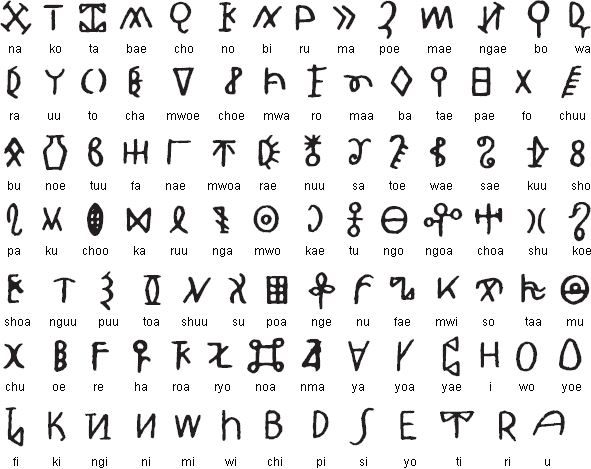
The mysterious writing system of the Indus Valley Civilization, the Harappan script
Introduction to the Harappan Script
The Harappan script is the writing system used by the people of the Indus Valley Civilization, one of the world’s earliest urban cultures, which thrived between 2600 and 1900 BCE in what is now Pakistan and northwest India. This ancient script has been found inscribed on a variety of materials, including seals, pottery, tools, tablets, and amulets. Despite the discovery of thousands of such inscriptions, the script remains undeciphered to this day, making it one of the greatest mysteries in archaeological and linguistic studies. The Harappan script stands as a silent testament to the intellectual achievements of a sophisticated ancient civilization. Though it remains unreadable, its very existence offers clues about communication, trade, and organization in the ancient world. Until a breakthrough is made, the Harappan script will continue to inspire curiosity and debate, holding its secrets close within the fragments of a long-lost civilization.
Structure and Characteristics
The script is primarily composed of short strings of symbols—most inscriptions are fewer than five signs long, though some contain up to 26. Scholars have identified over 400 unique symbols, many of which appear to be abstract or pictographic in nature. These symbols may have represented sounds, words, or entire concepts, but without a bilingual inscription (like the Rosetta Stone was for Egyptian hieroglyphs), interpretation has proven extremely difficult. The script was mostly written from right to left, although there are examples of bidirectional writing as well.
Purpose and Use
It is widely believed that the Harappan script was used for administrative, trade, and possibly ritual purposes. Most inscriptions are found on seals, which may have been used to mark goods, identify ownership, or convey information about the trader or community. The brevity of the inscriptions suggests they may have served a functional rather than literary purpose—more like labels or stamps than full documents or stories.
Challenges in Decipherment
One of the biggest obstacles to deciphering the Harappan script is the lack of longer texts, which makes it difficult to determine patterns or grammatical rules. Additionally, the script ceased to be used after the decline of the civilization, leaving no later versions or evolved forms to study. Unlike other ancient scripts such as Egyptian or Sumerian, the Harappan script has not been linked definitively to any known language family, further complicating efforts at translation.
Modern Research and Theories
Over the years, numerous scholars have attempted to decode the script using linguistic, statistical, and AI-based methods. Some believe it may be related to the Dravidian language family, while others propose links to early Indo-Aryan languages. Despite these efforts, no consensus has been reached. The script continues to intrigue historians, archaeologists, linguists, and enthusiasts alike, as its decipherment could unlock vital insights into the culture, governance, and daily life of the Indus Valley people.







1 Comments
No comments to display at this time. Be the first to add a comment!