
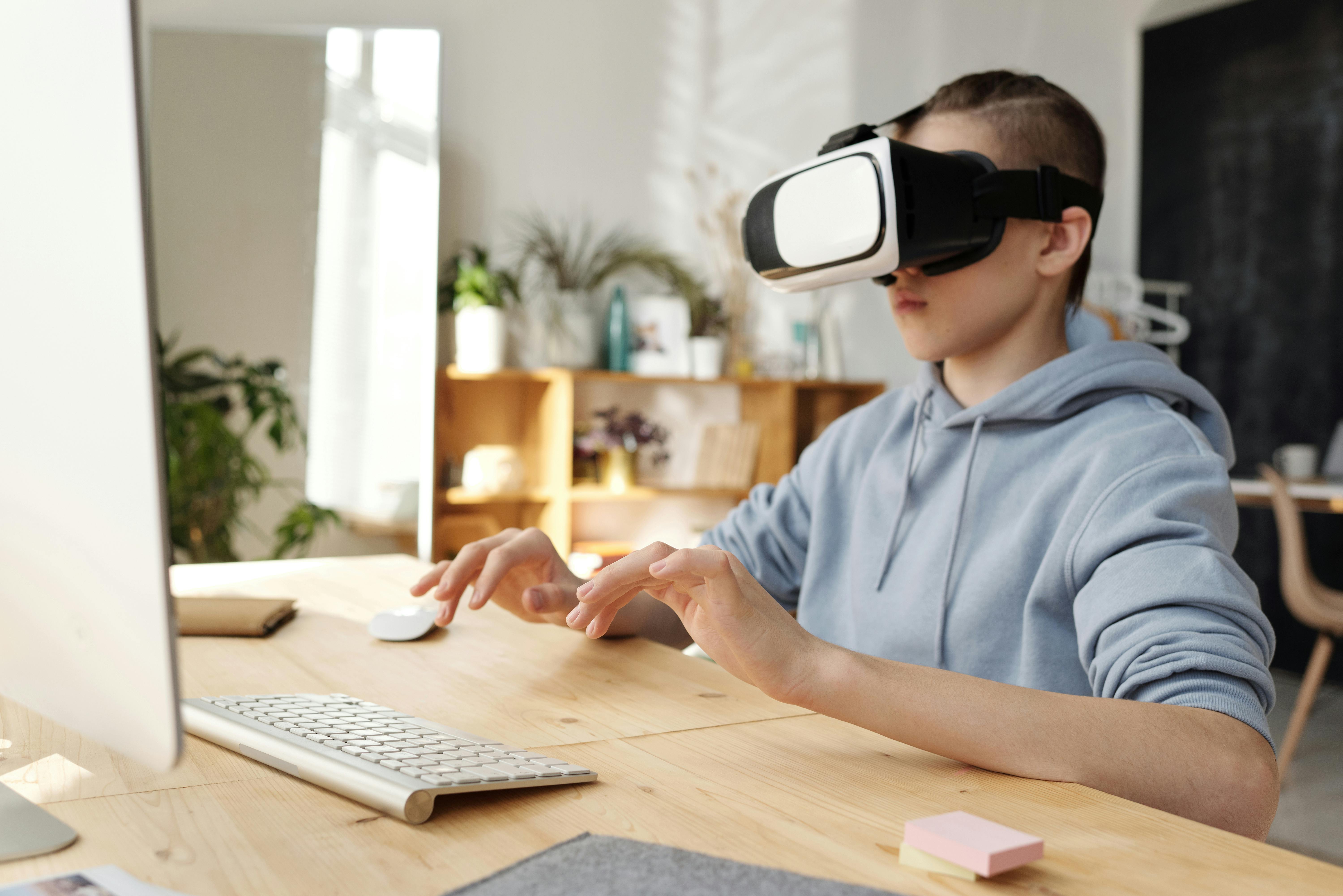
Virtual Reality in Education: Gimmick or Game-Changer?
Over the past few years, Virtual Reality (VR) has leapt from sci-fi films and gaming consoles into classrooms around the world. With headsets becoming more affordable and software more interactive, educators and tech enthusiasts alike are wondering: Is VR in education just another shiny gadget, or does it truly have the power to transform how we teach and learn?
Let’s explore whether VR is a short-lived gimmick, or a real game-changer in education.
What Is VR in the Classroom?
VR in education uses immersive 3D environments to simulate real-world or imaginary experiences. With a headset, students can explore ancient Rome, walk through the human heart, or even conduct virtual science experiments — all without leaving their desks.
Some popular VR applications in education include:
- Google Expeditions (now part of Google Arts & Culture)
- zSpace (interactive science labs)
- Labster (virtual biology, chemistry, and physics labs)
- Tilt Brush (VR painting for art education)
The Game-Changer: How VR Enhances Learning
1. Immersive Learning Boosts Engagement
Traditional lectures and textbooks can only go so far. VR creates highly engaging experiences that feel real. When students can explore a rainforest or fly through space in 360°, learning becomes an adventure — not a chore.
💬 “Tell me and I forget. Show me and I remember. Involve me and I learn.” — VR lives out this principle.
2. Deeper Understanding Through Simulation
In subjects like science or medicine, VR lets students perform tasks that would be too dangerous, expensive, or impossible in real life. Want to dissect a digital frog or practice surgery? You can — safely, and as often as needed.
3. Personalized and Self-Paced Learning
Many VR platforms let students explore at their own pace. This means learners can repeat activities, take detours, or focus on what interests them most, creating more personalized learning paths.
4. Accessibility and Inclusion
VR has the potential to bring experiences to students who might not otherwise have access. For instance, students in rural or underfunded schools can still go on virtual field trips, or children with physical disabilities can engage with learning in ways previously inaccessible.
The Gimmick: Where VR Still Falls Short
1. Cost and Equipment Limitations
High-quality VR headsets and supporting technology can be expensive. Many schools, especially in underserved communities, simply can’t afford the hardware or the infrastructure to support VR.
2. Technical Issues and Learning Curve
Teachers and students need training to use VR effectively. Tech glitches, motion sickness, and usability issues can quickly turn an exciting lesson into a frustrating experience.
3. Lack of Quality Content
While VR in education is growing, there’s still a shortage of high-quality, curriculum-aligned content — especially for subjects outside of science and geography.
4. Risk of Distraction or Over-Reliance
If not used with intention, VR can become more of a novelty than a tool. Some critics argue that it’s easy for the “wow” factor to overshadow the actual learning objectives.
So… Gimmick or Game-Changer?
Like most educational tools, VR is only as powerful as the way it’s used.
- In the hands of innovative educators with access to the right resources, VR is absolutely a game-changer. It makes abstract concepts tangible, engages reluctant learners, and provides unique experiences that are otherwise impossible in a traditional classroom.
- But without strategic implementation and equity in access, it risks becoming just another gimmick — exciting but underused, or worse, used without real educational purpose.
Final Thoughts: The Future of VR in Education
As the technology becomes more affordable and more educators are trained to integrate it meaningfully, VR could become as common as whiteboards or tablets in schools. But it will take thoughtful planning, collaboration, and a focus on pedagogy — not just tech for tech’s sake.
For now, VR sits at a crossroads. With the right approach, it can revolutionize learning. Without it, it risks gathering dust in the tech closet.
What do you think?
Is VR the future of education, or just a high-tech distraction? Share your thoughts in the comments below!





Comments
No comments to display at this time. Be the first to add a comment!